
Does rain ruin a window clean?
Rain is not what makes your windows dirty. Here is what actually does, why a wet month is the worst one to skip, and the weather that genuinely does stop the job.
It comes up every autumn, and it has come up a lot this month. Somebody sees the forecast, or wakes up to a night of wind and rain, and messages to say leave it this time, there is no point, it is only going to rain again.
It is a fair thing to think. For about a hundred years it was even true. It stopped being true when the method changed, and the honest version is worth two minutes of your time, because putting the clean off is the only part of that week that actually costs you anything.
Rain does not make windows dirty. It makes already dirty windows look dirty.
On glass that was cleaned recently there is nothing for the rain to pick up, so it runs off and leaves nothing behind. On glass that has been left, there is plenty, and the rain puts it somewhere you can see it.Rain is cleaner than the water in your kitchen tap
Rain is water that evaporated, left everything it was carrying behind, and condensed again. By the time it lands on your window it has almost nothing in it. Measured, rainwater comes in at roughly 7 milligrams of dissolved solids per litre. Tap water is usually somewhere between 150 and 250.
That matters because dissolved minerals are the only thing in water that can mark glass. It is why a car dries covered in little rings after you hose it down, and it is exactly why Liam does not clean your windows with a hosepipe. The water that goes up the pole has been pushed through a filter that takes it down to zero, so when it dries there is genuinely nothing left to dry.
Dissolved solids are the only thing in water that can leave a mark on glass when it dries. Rain sits far nearer to the water we clean with than it does to the water in your kitchen.
So why do windows look terrible after it rains?
Because of what was already on them.
A window nobody has touched for a few months is holding a fine, even film of road dust, soot, pollen and salt. Because it is spread evenly you half stop seeing it. Then it rains. The water picks all of that up, drags it down the glass in lines, pools along the bottom edge and dries there. The same amount of dirt is now sitting in streaks and tide marks instead of a flat film, and it looks ten times worse than it did yesterday.
Nothing new arrived. It got rearranged somewhere you cannot ignore it.
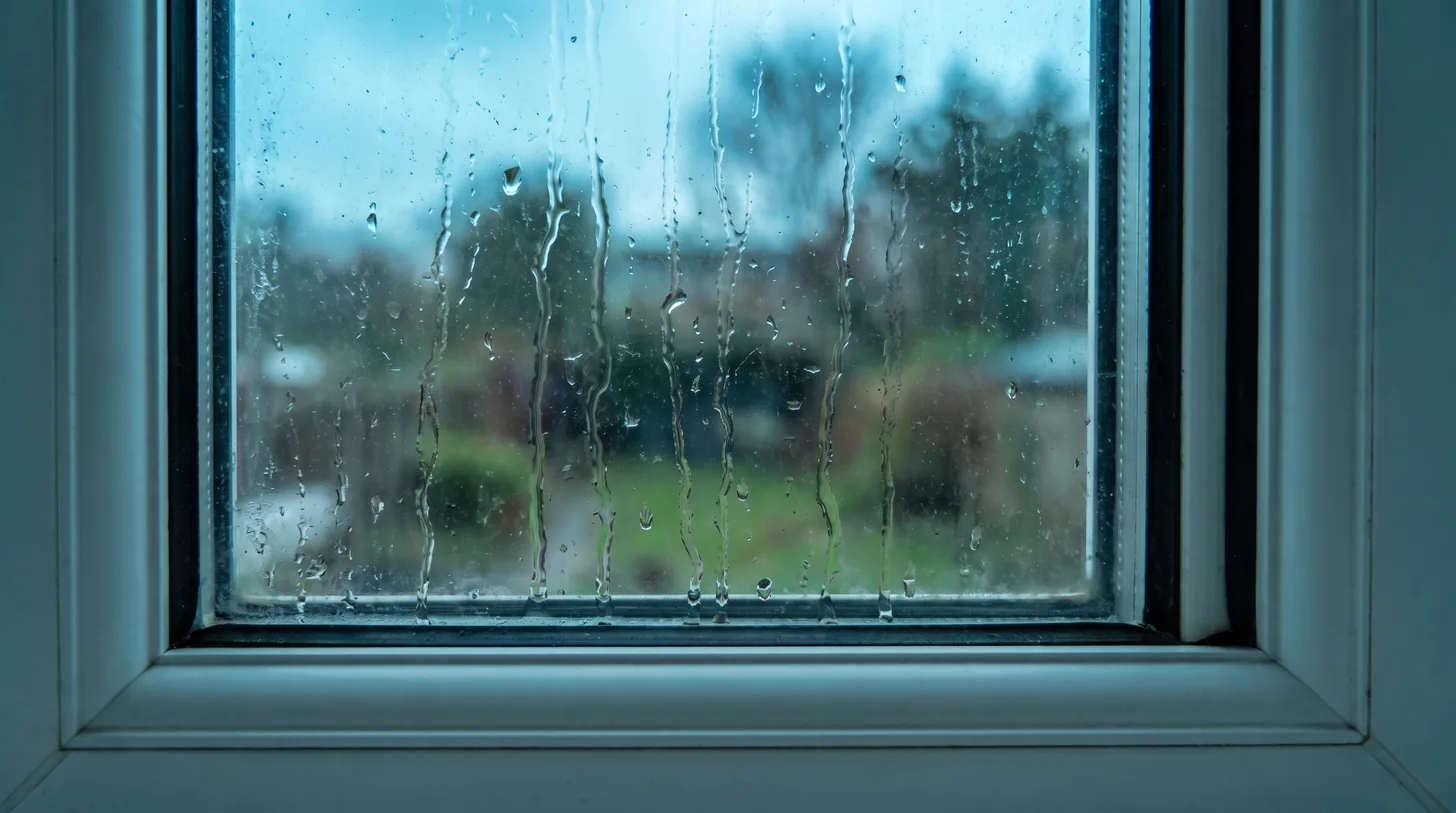
Do the same thing to a window that was cleaned a fortnight ago and nothing happens, because there is nothing on it to drag anywhere.
Drawn as a diagram rather than staged as a photo, because it is the mechanism that matters and neither of those is anybody's actual house.
The same thing, closer up
Drag the handle across. It is the same weather on both sides. The only difference is what the rain found when it got there.
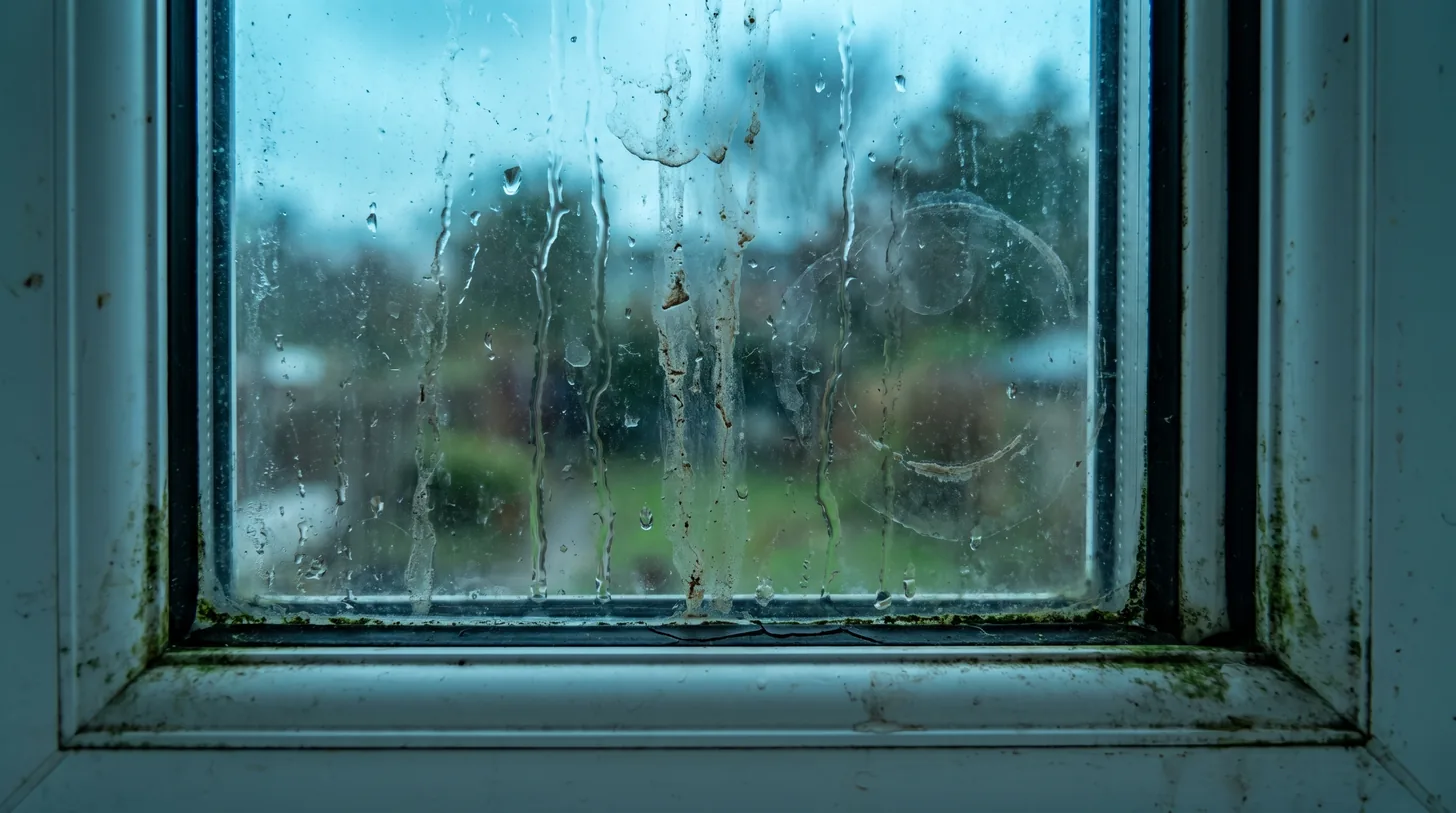
 Left alone
Cleaned
Where the belief comes from, and why it was right
If your windows were ever done with a bucket, a squeegee and a bottle of soap, you were not imagining it. Traditional cleaning leaves a thin film of detergent on the glass, and detergent is sticky. Dust lands on it and stays. Then the first proper rain hits it and within a couple of days the whole window is spotted and streaked.
Plenty of people have watched that happen on their own house, decided rain ruins a clean, and have been quietly sceptical about window cleaners ever since. Fair enough.
Pure water leaves no detergent on the glass at all. There is nothing sticky for dust to hold onto and nothing for the rain to lift, so windows cleaned this way hold up noticeably better in wet weather rather than worse. There is more on the two methods in water fed pole against traditional cleaning, and on the water itself in what pure water actually is.
A storm is a reason to clean, not a reason to skip
Wind does not blow your windows clean. It lifts soil off the borders, grit off the road, pollen, leaf litter and whatever has been sitting on the roof, and throws the lot at the side of your house. The week after a proper blow is when glass, frames and sills look their worst all year.
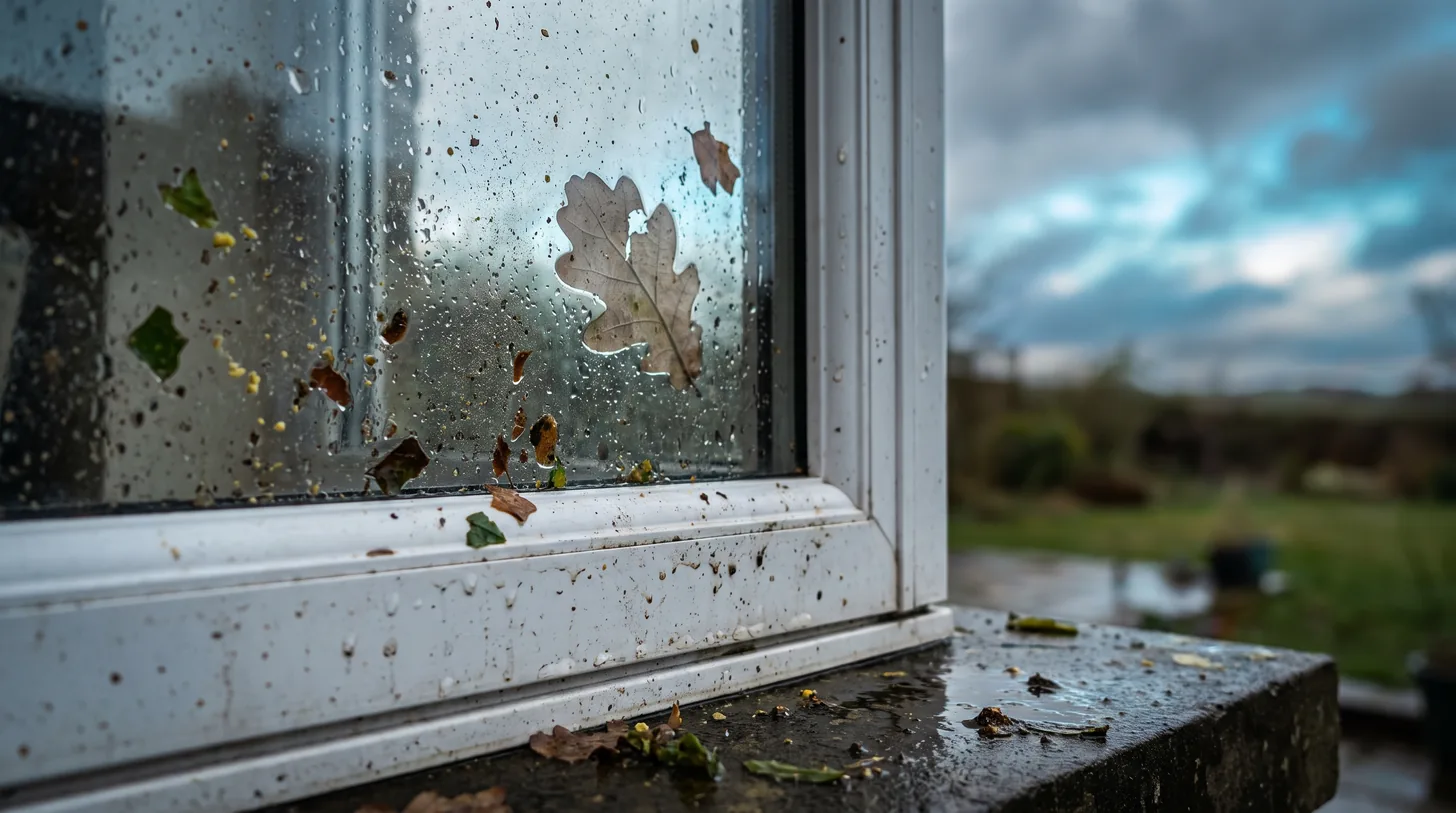
Salt is the one almost nobody thinks about. Once the gritters are out, the spray off the road carries salt onto everything facing it, and salt holds onto water. It is why cars look permanently filthy from December onwards, and your windows are stood in the same air as the cars.
What actually dirties a window
- roadTraffic filmExhaust soot and brake dust. Worst on anything facing a road, and it is greasy rather than loose, so it needs scrubbing off rather than rinsing off.
- gardenPollen, seed and soilSpring and early summer for the pollen, any windy week for the soil off the borders. Both stick when they get wet.
- winterRoad saltDecember to March. Thrown up as spray, and it draws moisture, so it keeps a window looking damp and smeared long after the rain has stopped.
- rooflineWhatever is above the glassMost of the grime on a window lives in the frame, the seal and the sill, not on the pane. The first rain after a dry spell washes it straight down onto clean glass.
- wildlifeBirds and spidersTop corners and anywhere under an eave or a soffit. Neither of these is going anywhere on its own.
Rain is not on that list. Rain is the thing that shows you the list.
What putting it off actually does
An eight week round that gets skipped once becomes a sixteen week round, and sixteen weeks is not simply twice as dirty. Film that has sat through a month of wet weather bonds to the glass, organic growth gets going in the seals and the corners, and it stops being something that lifts off on the first pass.
The odd thing is that the reason people give for skipping is usually the exact reason not to. Wet months put more on your windows, not less. Those are the ones worth keeping.
When Liam genuinely will call it off
None of the above means anything if this part is not straight with you, so here it is.
- noHigh windThis is the real one. A pole goes up a long way, it is not safe in a gale, and the water blows off the glass before it can do anything. He will move you rather than waste your money.
- noFrostWater on glass below freezing becomes ice on glass. There is no clever way round it and nobody is going to try.
- noA heavy stormNot a result problem, a safety and sense problem. If it is genuinely wild, he is not working in it.
- fineOrdinary rainHe will work in it and your windows will be fine. The glass is scrubbed and then rinsed with pure water and left to dry on its own, so rain landing on it afterwards is doing the same job the rinse just did.
Heavy storms, high winds or frost and we reschedule at no charge. If Liam cannot clean, he does not clean and he does not charge. You are never paying for a visit that did not happen.
The short version
- 1Rain carries almost nothingSo there is nothing in it that can make a clean window dirty.
- 2What you see after rain was already thereMoved from an even film into streaks and tide marks, which is why it looks worse rather than better.
- 3There is no detergent left on your glassWhich is what used to cause the spotting a few days after a traditional clean.
- 4Storms put more on your windows, not lessSoil, grit, pollen and leaf litter, none of which rain takes back off.
- 5Skipping one makes the next one harderAnd a heavily soiled clean can need a second visit to get back to where you were.
If you want a figure for your own house, the instant quote takes about thirty seconds, and there is more on how often is sensible in how often windows need doing. If you are already on the round and the forecast is grim, the short answer is to leave it with Liam. He will move you himself if it is genuinely not worth doing.
Questions people actually ask
It is forecast to rain tomorrow. Should I put the window cleaner off?
No. Rain carries almost nothing in it, so there is nothing in it that can dirty clean glass. Putting the visit off is the only part of that day that costs you anything, because it doubles the gap and gives the dirt longer to bond on.
Will the rain not just wash my windows for me?
No, and it is the same fact pointing the other way. Rain has no scrubbing in it, so it cannot lift bonded film. It never touches the frames and sills properly, and it dries wherever it happens to run. That is why a rained on window ends up streaky rather than clean.
My windows looked spotty a few days after they were cleaned. What was that?
Almost always leftover detergent from traditional cleaning. Soap film is sticky, dust holds on it, and the first rain turns the lot into spots. Pure water leaves no detergent on the glass at all, so there is nothing for dust to cling to and nothing for the rain to lift. There is more on that in why the windows get left wet.
It has been stormy all week. Is a clean even worth it?
A storm is the best argument for one. Wind throws soil, grit, pollen and leaf litter at the side of your house, so the week after a blow is when glass and frames look their worst. Rain cannot take any of that off. Only a clean can.
Does Liam really clean windows in the rain?
Yes, in ordinary rain, and it makes no difference at all to the result. The glass is scrubbed and then rinsed with pure water and left to dry on its own, so rain landing on it afterwards is doing the same thing the rinse did.
What if the weather is genuinely too bad to clean?
Heavy storms, high winds or frost and we reschedule at no charge. High wind is the real one: a pole that high is not safe in it, and the water blows off the glass before it can work. If Liam cannot clean, he does not clean and he does not charge.
Still not sure? Just ask him.
If the weather has you wondering whether this week is worth it, send Liam a message and he will tell you straight. He would rather move you than clean something that will not come up right.